
Standard delivery is free in Belgium and Luxembourg for any order over 150€ More Infos
Free delivery from €150 throughout the Benelux
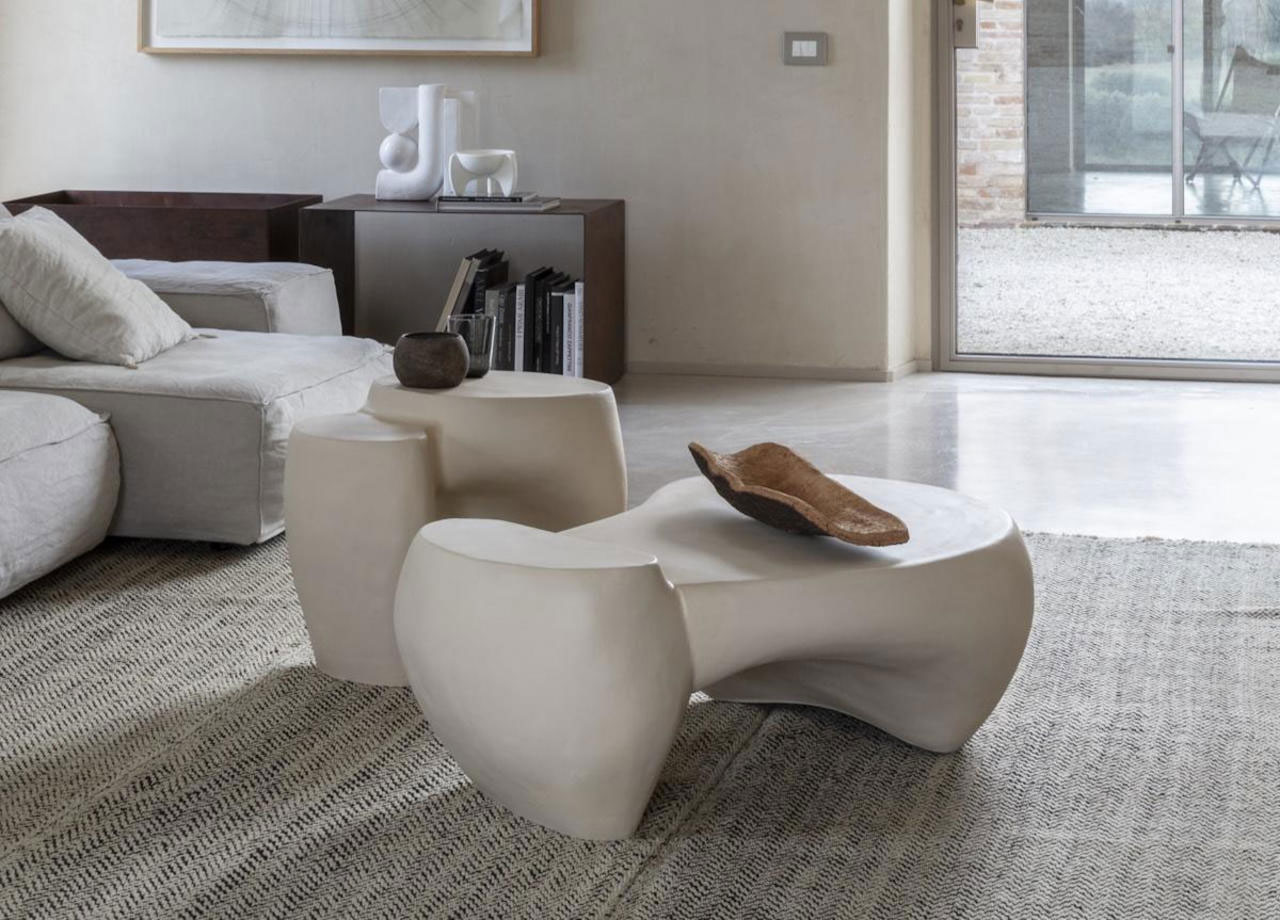
Choosing a designer coffee table is about more than just style. It is a key element in living room design, helping to define the space, complement the sofa, and shape the overall look and feel of the interior.
In a contemporary interior design project, a high-end coffee table plays a central role. It often becomes the focal point around which everyday activities, conversations, and moments of relaxation naturally unfold. Yet despite its importance, it is still too often treated as an afterthought when furnishing a space.
Recent trends in contemporary furniture reveal a clear shift toward softer, more natural forms.
Designer coffee tables are increasingly embracing organic, sometimes asymmetrical shapes that bring a sense of fluidity and lightness to the living room. This approach stands in contrast to the strictly geometric designs that dominated interiors in previous years.
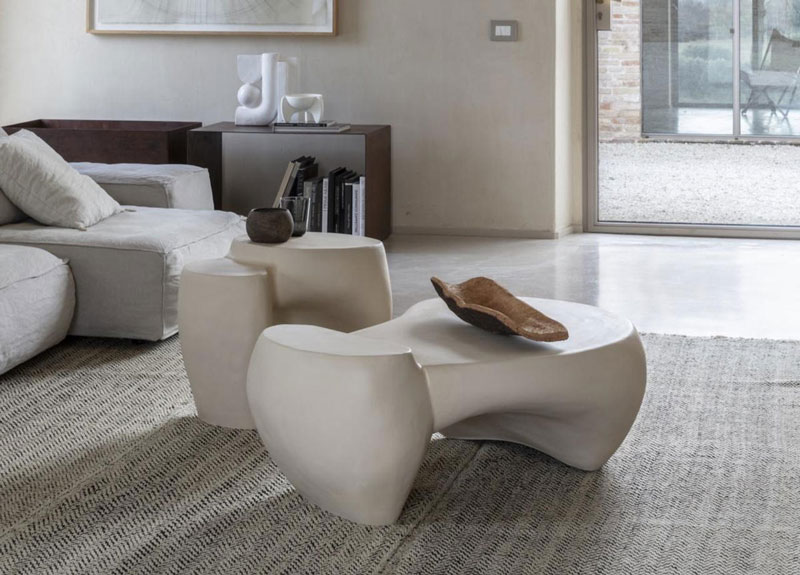
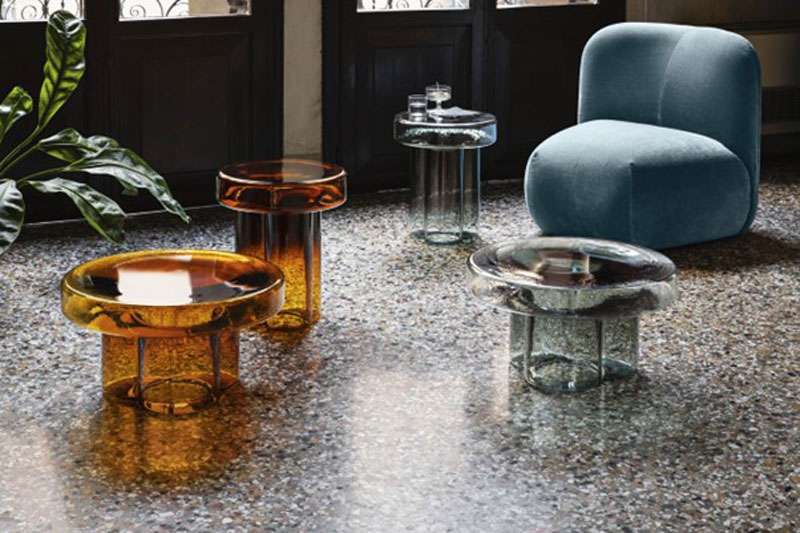
Materials are evolving in the same direction. Marble, ceramic, natural wood, and crafted or tinted glass are being used more frequently in understated yet expressive compositions. These materials add character while maintaining a refined, contemporary aesthetic.
The shape of a designer coffee table plays a key role in the overall perception and flow of a living room. It influences both circulation and the visual balance of the space.
A round coffee table instantly softens a room’s composition. With no sharp corners, it encourages easy movement and creates a more fluid atmosphere, making it particularly well suited to compact spaces or living rooms arranged around modular sofas.
An oval coffee table offers a subtle balance between softness and structure. Its elongated shape provides a strong presence while maintaining visual lightness and flow. It is an especially versatile option for contemporary interiors.
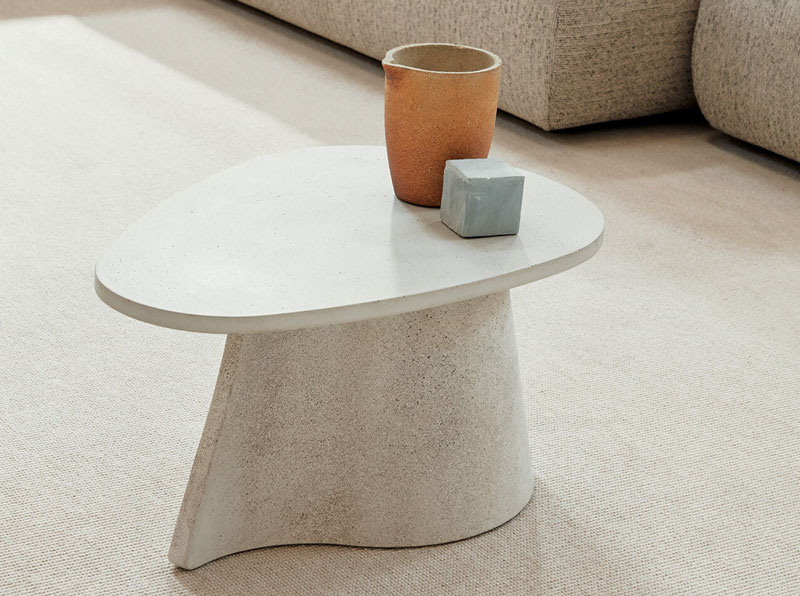
Fossil – MDF Italia. A coffee table with sculptural, organic lines, where the simplicity of its form highlights a refined interplay of materials and proportions. Also suitable for outdoor use.
A rectangular coffee table remains the most architectural choice. It naturally defines the space, pairs beautifully with straight-lined sofas, and complements more graphic, structured interior compositions.
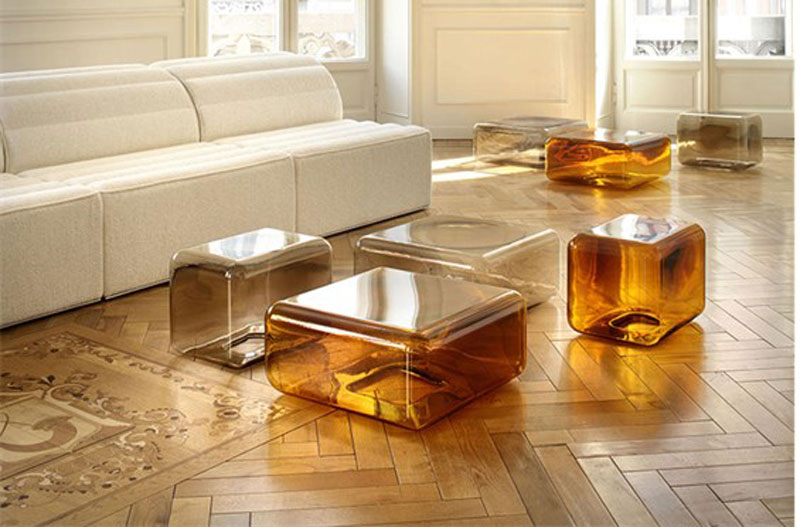
The choice of materials plays a crucial role in defining the character and perceived quality of a high-end coffee table.
Wood brings warmth and a natural feel to the space. Marble and ceramic introduce a more mineral, timeless dimension, adding elegance and sophistication. Glass, on the other hand, creates a sense of lightness, visually opening up the room and enhancing the feeling of space.
Metal, often used in slim, refined frames, contributes a more architectural and contemporary aesthetic while maintaining a light visual presence.
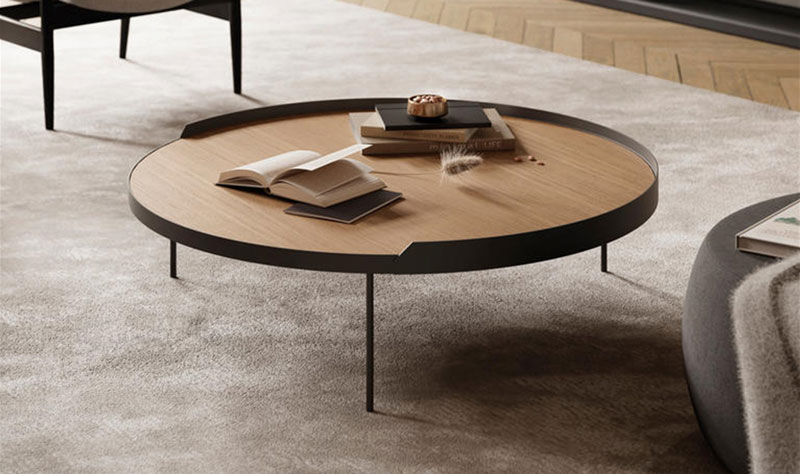
To create a well-balanced living room, a designer coffee table should follow a few key proportions.
As a general rule, the table should measure approximately two-thirds the length of the sofa. This ratio helps maintain visual harmony within the space.
The ideal height is typically between 35 and 45 cm (14 to 18 inches), placing the tabletop close to the sofa seat for maximum comfort and practicality.
Finally, it is recommended to leave around 40 cm (16 inches) of clearance between the coffee table and surrounding seating. This ensures smooth circulation and a comfortable flow throughout the living area.
A designer coffee table never stands alone. It is part of a wider composition that includes the sofa, the rug, and the lighting.
The rug defines the living area and establishes proportions, while lighting highlights materials and volumes, shaping the overall perception of the space.
In contemporary interiors, this overall balance is essential to achieving a living room that feels cohesive, comfortable, and enduring.
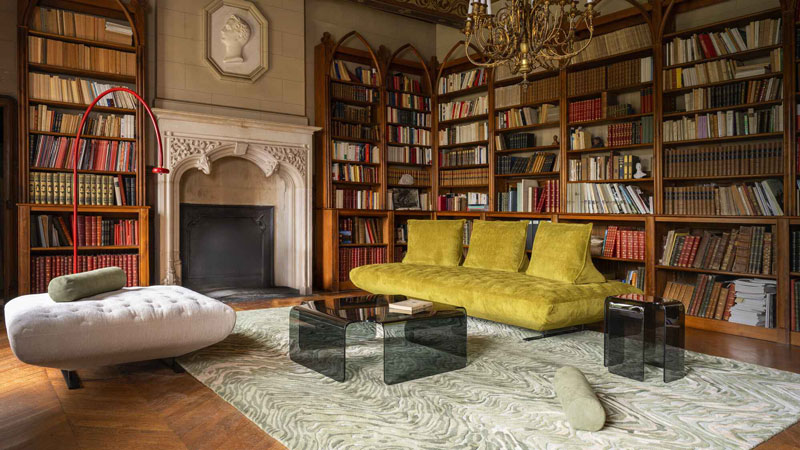
Niagara – Ligne Roset. A glass coffee table with clean, minimalist lines that almost disappears into the space, while subtly structuring the living room with precision and lightness.
At Sisu, on Avenue Georges Henri in Brussels, a selection of high-end designer coffee tables is offered in a setting designed to highlight true volumes, materials, and proportions.
The showroom brings together pieces from leading contemporary design houses such as Ligne Roset, Zanotta, Treku, Miniforms, Acerbis, Mogg, and Desalto.
Each coffee table is selected for its aesthetic coherence, manufacturing quality, and ability to integrate seamlessly into contemporary interiors.
Personalized guidance is provided to help you choose the coffee table best suited to your sofa, your space, and your lifestyle. Free delivery in Belgium.
Choosing a designer coffee table goes far beyond decoration. It is an interior design decision that structures the living room and shapes the way the space is experienced on a daily basis.
Through shapes, materials, and proportions, it becomes an essential element of living space harmony—designed to last and to support everyday use over time.
*Not valid in conjunction with any other ongoing promotions.