
Standard delivery is free in Belgium and Luxembourg for any order over 150€ More Infos
Free delivery from €150 throughout the Benelux
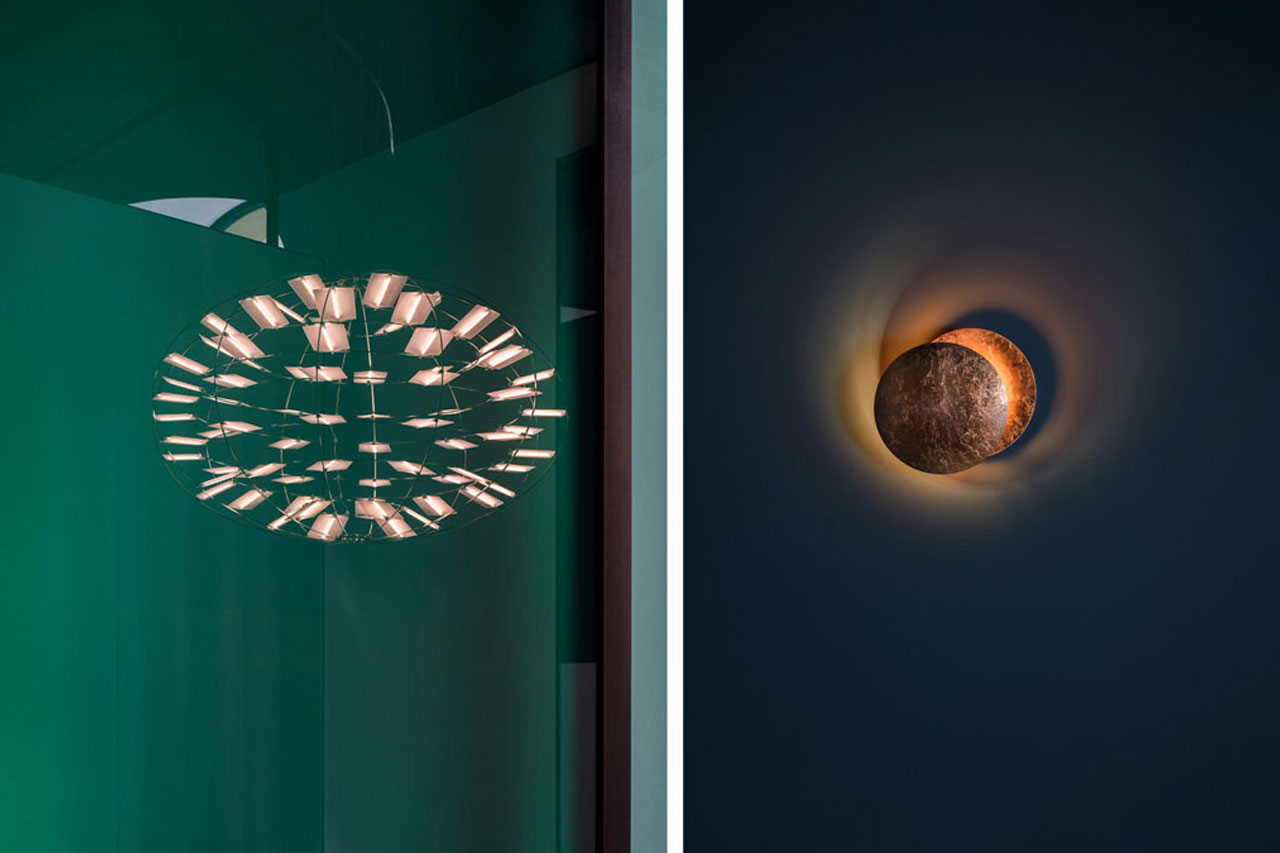
The year 2025 is set to mark a new chapter in interior design. Emerging trends combine boldness with refinement, embracing organic shapes, rich colours, and sculptural lighting that transforms living spaces into true works of art. Discover how the furniture, décor, and lighting trends of 2025 are redefining modern interiors, harmonising natural materials with timeless colour palettes.
Straight lines are giving way to softer, more rounded forms inspired by nature. Contemporary furniture is embracing this shift, adopting subtle curves that bring comfort, fluidity, and a sense of ease to interior spaces.
Sofas, armchairs, and coffee tables are increasingly defined by welcoming silhouettes and gentle contours, transforming the atmosphere of a room and creating interiors that feel both calming and sophisticated.
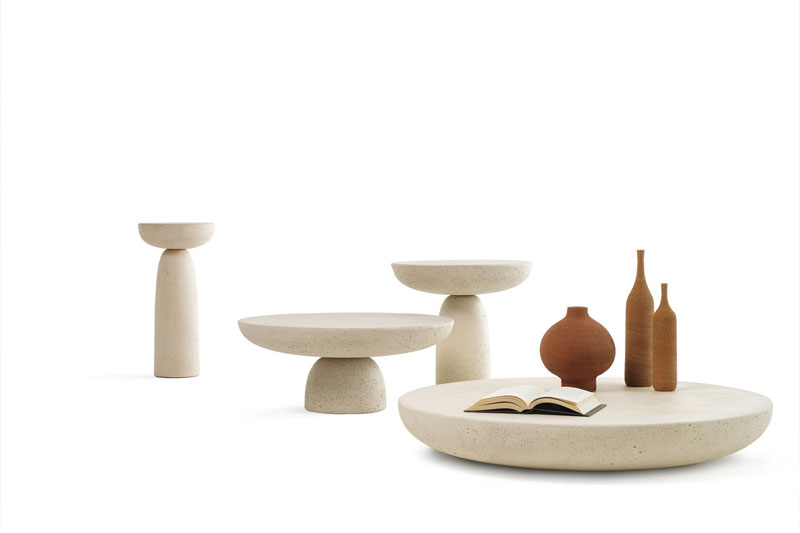
Featured product: Olo Concrete coffee table by the Italian brand Mogg.
Furniture and decorative objects with geometric and asymmetrical forms are also gaining momentum, notably through the resurgence of the Memphis style, known for its bold patterns and vibrant colours.
These statement pieces bring energy, personality, and a contemporary edge to any interior, whether in the living room, home office, or even the kitchen.
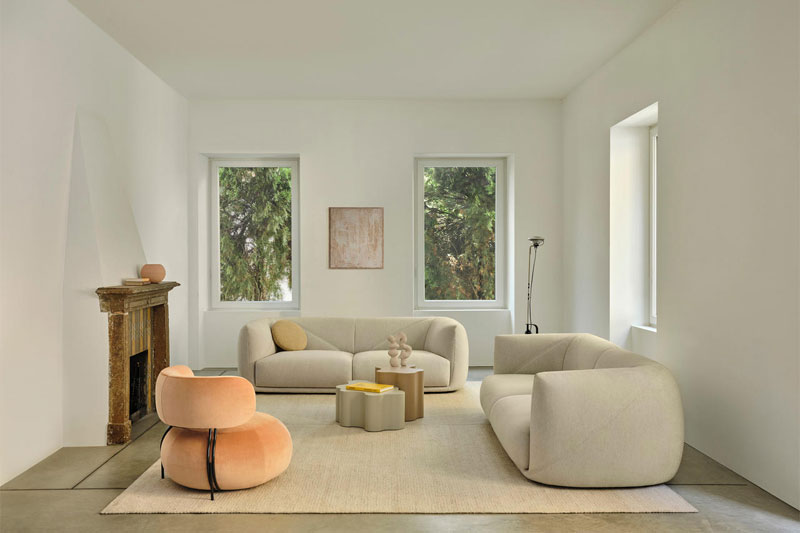
Featured product: Vela sofa by Saba Italia.
The colour palette of 2025 is both rich and soothing. Natural tones such as forest green, deep blue, and warm brown are taking centre stage, bringing a sense of serenity and a stronger connection to nature.
One of the year’s standout shades, Pantone’s Mocha Mousse, pairs beautifully with metallic accents and noble materials, creating interiors that feel both elegant and inviting.
Rich tones such as ruby red, mauve, and deep blue are also making their mark, helping to create sophisticated and layered atmospheres. These colours interact beautifully with light and space, adding depth, character, and intensity to every room.
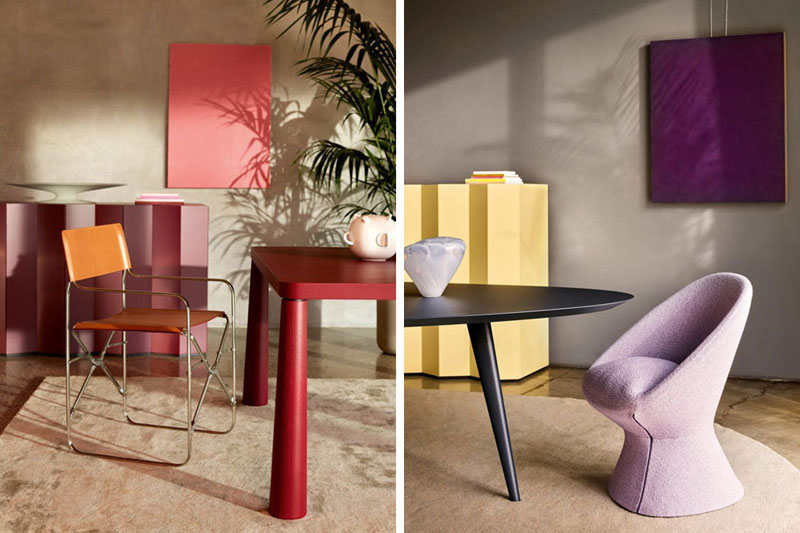
Featured products: Z24 sideboard by Muller Van Severen for Zanotta, Tweed table and Guino chair by Zanotta.
There is no single answer to this question, as the amount of light required depends on several factors: the size of the room, ceiling height, wall and furniture colours (some colours and materials reflect light better than others, while darker surfaces tend to absorb it), and the activities performed within the space.
However, the following guidelines can help you choose the right LED bulb for each room. These recommendations are based on the ideal illuminance level expressed in lumens per square metre (lm/m²) for common residential uses.
Living room: lighting should be versatile enough to provide both comfortable general illumination and a cosy ambient atmosphere. The recommended light level for a living room ranges from 100 to 300 lm/m².
For general lighting, consider designer pendant lights or ceiling fixtures with moderate output, complemented by table lamps and floor lamps that provide a softer, warmer glow. Dimmable bulbs are particularly useful, allowing the light intensity to be adjusted according to the time of day and the desired mood.
In 2025, lighting fixtures are far more than simple sources of illumination. They are becoming luminous sculptures, transforming lighting into a genuine form of artistic expression.
Bold geometric forms, blown glass, and metals such as chrome and brass are used to create spectacular statement pieces. These luminaires bring an artistic dimension to interiors while remaining fully functional.
Whether through pendant lights or wall sconces, each fixture stands out with its innovative design, combining aesthetics and technology to deliver lighting that is soft, adaptable, and practical. More than ever, these pieces draw the eye and become true focal points within a room.
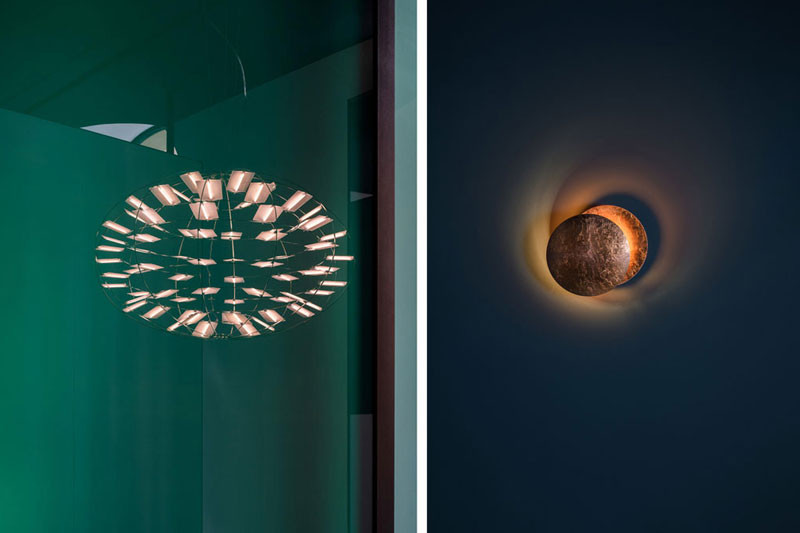
Featured products: Chloris pendant light by Arihiro Miyake for Nemo Lighting, and Lederam Wall wall light by Catellani & Smith.
In 2025, chrome is making a strong comeback, bringing a sense of brilliance and refinement to interior spaces. Both retro and futuristic, this material pairs beautifully with industrial and mid-century modern aesthetics.
From furniture with metallic legs to chrome lighting fixtures and brass accents, these finishes introduce a sophisticated and contemporary dimension to the home while enhancing the interplay of light and reflections throughout the space.
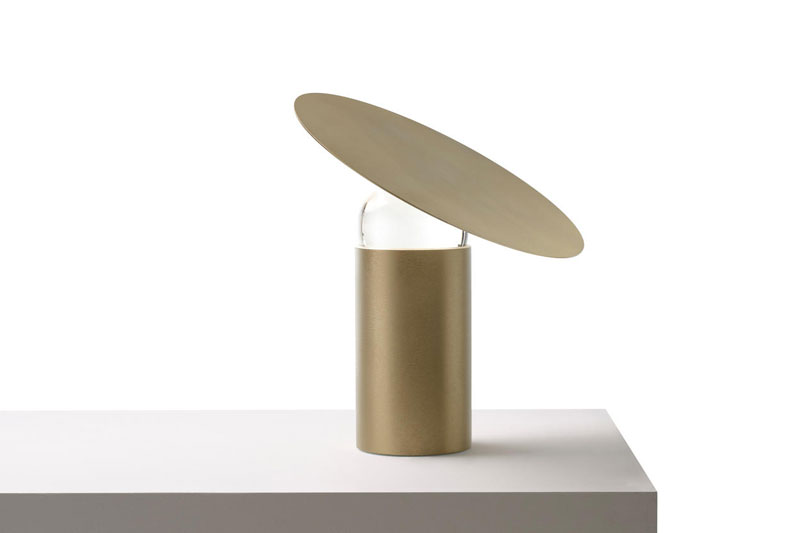
Featured product: ERA table lamp by Mogg
As living spaces become increasingly compact, furniture is evolving toward greater intelligence and versatility. Multifunctional pieces such as convertible sofas, modular shelving systems, or desks with integrated storage respond to the growing demand for practicality without compromising design.
These elements are conceived to adapt to modern lifestyles while maintaining a strong aesthetic identity, proving that functionality and elegance can coexist seamlessly in contemporary interiors.
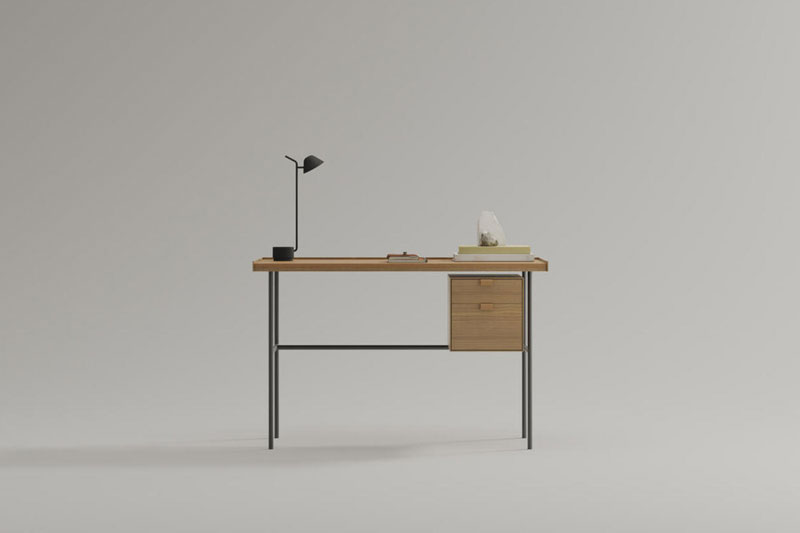
Featured product: Kutxa occasional desk by TREKU
The 2025 interior design trends invite us on a journey toward more elegant, functional, and sophisticated living spaces. Between natural hues and deep tones, organic shapes and sculptural lighting, every element contributes to creating interiors where comfort and aesthetics meet in harmony.
By choosing contemporary furniture and high-end lighting pieces, it becomes possible to design a home that feels both modern and timeless—aligned with the aesthetics and needs of tomorrow.
*Not valid in conjunction with any other ongoing promotions.