
Standard delivery is free in Belgium and Luxembourg for any order over 150€ More Infos
Free delivery from €150 throughout the Benelux
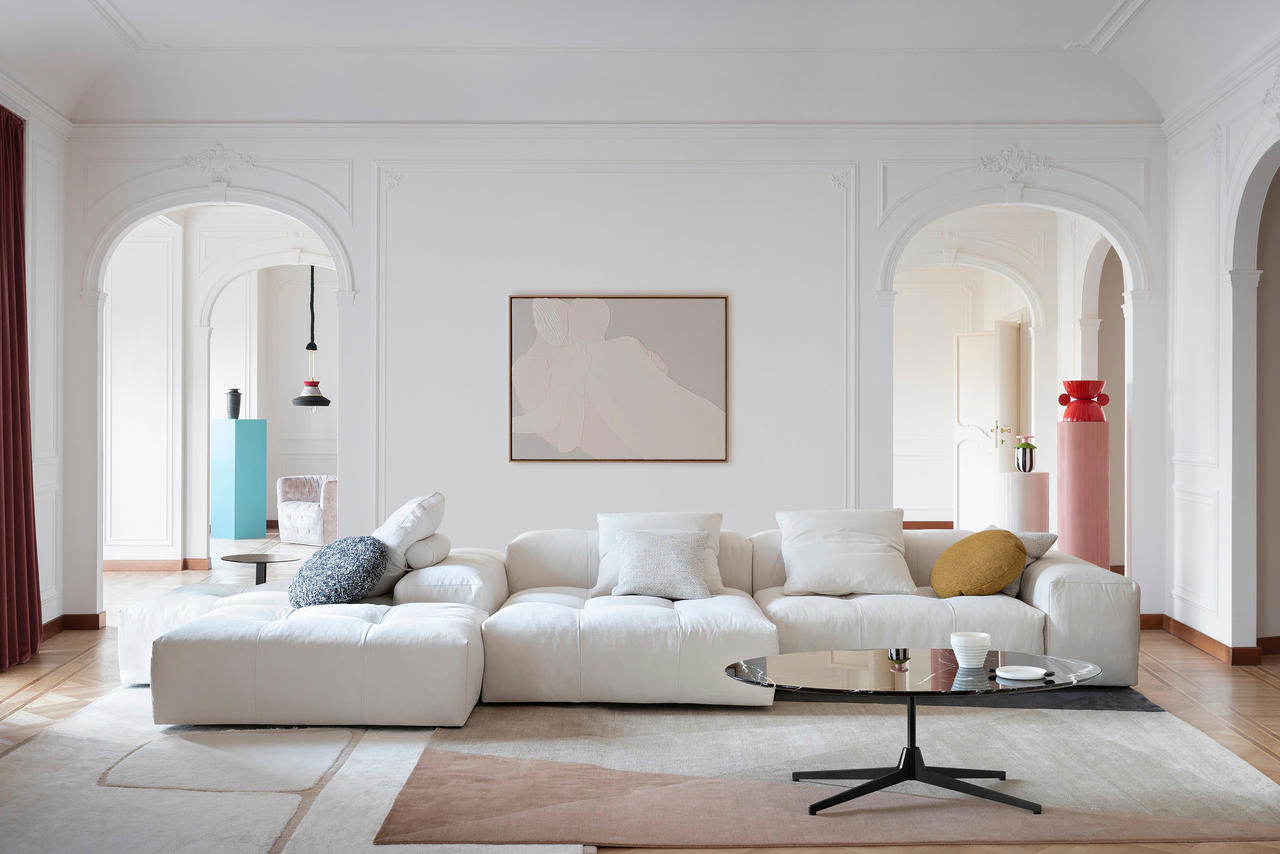
Choosing a sofa is never a trivial decision. It is a choice that shapes both the space and the overall balance of an interior, and one that is typically expected to last for several years.
In a contemporary home, the sofa holds a unique position. Neither purely an object nor entirely architecture, it helps define the space as much as it furnishes it. It often becomes the focal point around which daily life is organized—conversations, moments of rest, and shared time. Quietly, it becomes the true center of gravity of the living room.
Before even considering style, size, shape, or comfort, it is important to recognize this idea: a sofa is not simply chosen to complete a room. It is an element that actively helps define it.
Choosing the right sofa therefore means going beyond immediate aesthetics and considering deeper aspects such as real usage, proportions, materials, and the way the sofa interacts with the surrounding space.
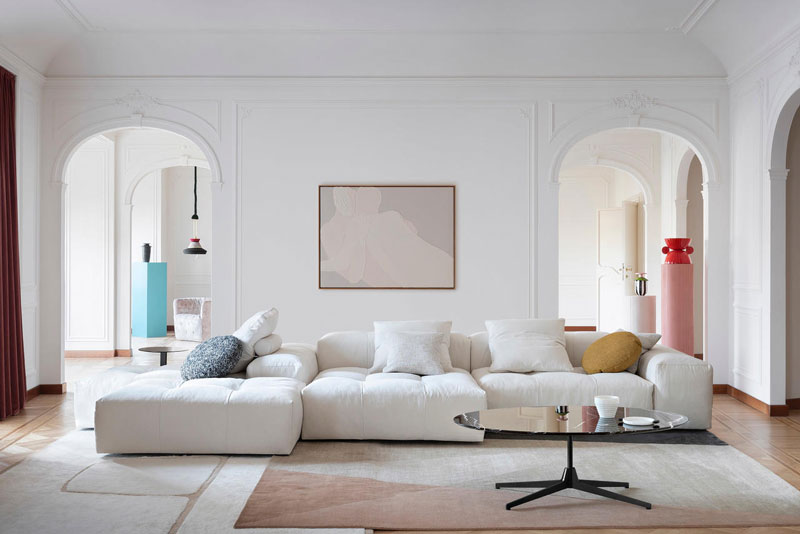
Pixel – Saba Italia. A modular sofa that adapts freely to space and usage, between composition and decomposition.
In contemporary interiors, the sofa plays a central role. It does not simply furnish a space—it structures it, guides its perception, and defines how it is used.
Some living rooms are designed around a sense of conviviality and relaxation, while others adopt a more formal, almost architectural approach. In all cases, the sofa acts as a reflection of lifestyle.
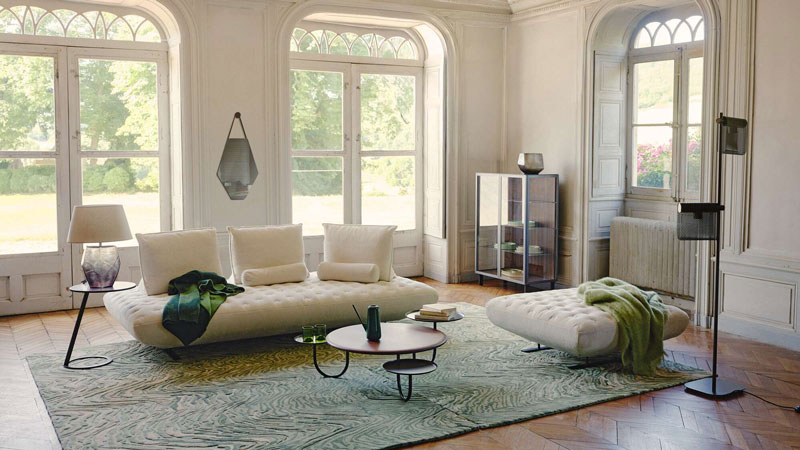
The Prado sofa by Ligne Roset does not simply occupy space—it structures it and organises its uses. Thanks to its adjustable backrests, it redefines the relationship to the living room, alternately creating spaces for conversation, relaxation, or openness within the room.
This is why the first question to ask is not about style, but about how the space will actually be lived in on a daily basis. A sofa intended for long moments of relaxation will not follow the same logic as a model designed to structure a reception area.
A sofa can be visually successful and still completely unbalance a room if its proportions are not carefully considered.
Seat depth plays a fundamental role here. A shallower seat encourages a more upright, structured posture, while a deeper seat invites a more relaxed, almost informal way of sitting. Height, meanwhile, directly influences the visual perception of the piece: lower profiles lighten the space, while higher ones anchor it in a more classic reading.
The overall length of the sofa should always be considered in relation to circulation within the room. An overly large model can quickly overwhelm a space, while a sofa that is too small may lose presence and coherence.
In the high-end segment, comfort is never the result of simple cushioning. It relies on true engineering.
The quality of the suspension system, the density of the foam, and the internal structure all determine long-term durability, seating comfort, and overall support. A well-designed sofa retains both its comfort and shape even after years of use, whereas lower-quality models tend to lose their structure much more quickly.
This technical level of refinement is often invisible to the eye, but it is immediately perceptible in everyday use.
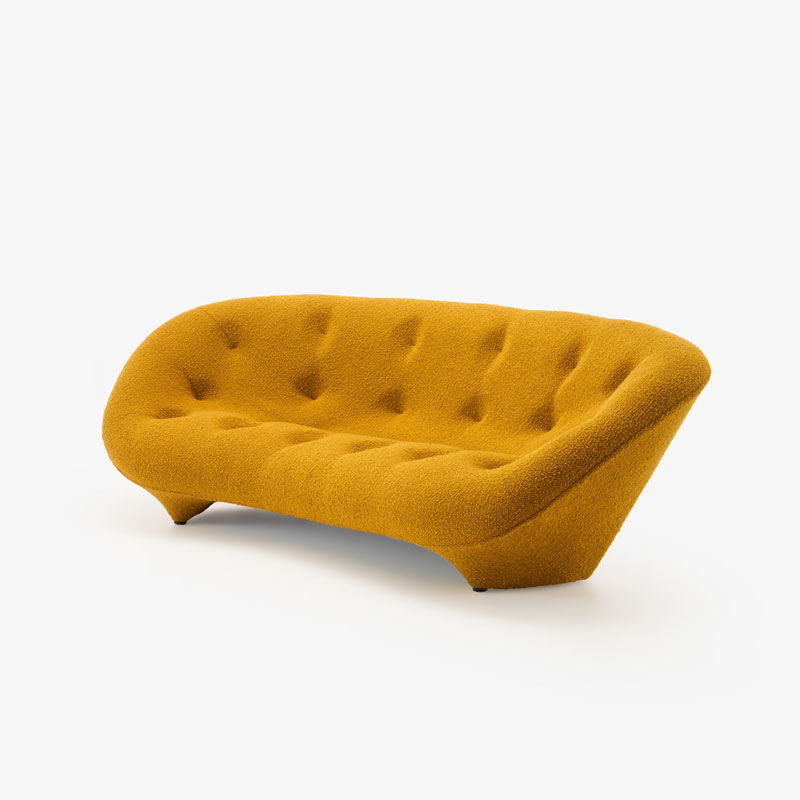
Ploum – Ligne Roset. Undoubtedly one of the most comfortable sofas on the market, the result of in-depth research where technique gives way to sensation.
The choice of upholstery is one of the most decisive factors in how a sofa is perceived.
Fabric offers a great degree of expressive freedom. It allows for variations in texture, tone, and material effects, while also providing an immediate sense of comfort. It is often used in warm, contemporary, or minimalist interiors.
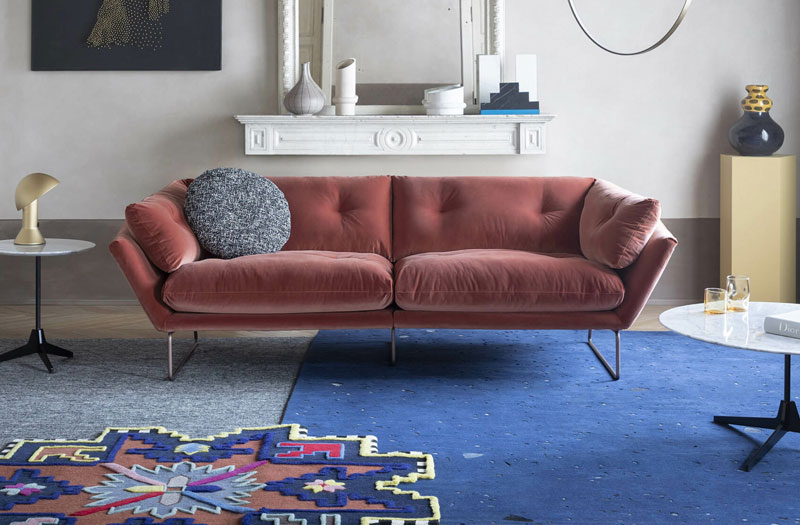
New York Suite – Saba Italia. A velvet-like fabric that captures light and enhances the sense of comfort from the very first glance.
Leather, on the other hand, introduces a more timeless dimension. It evolves over time, develops a natural patina, and gives the sofa a stronger, more assertive presence. It is often chosen for pieces with a strong identity or for more classic interiors.
Some models also offer removable covers, making maintenance easier and extending the product’s lifespan. Others, by contrast, feature fixed upholstery, offering a tighter, more architectural finish where tailoring precision becomes essential.
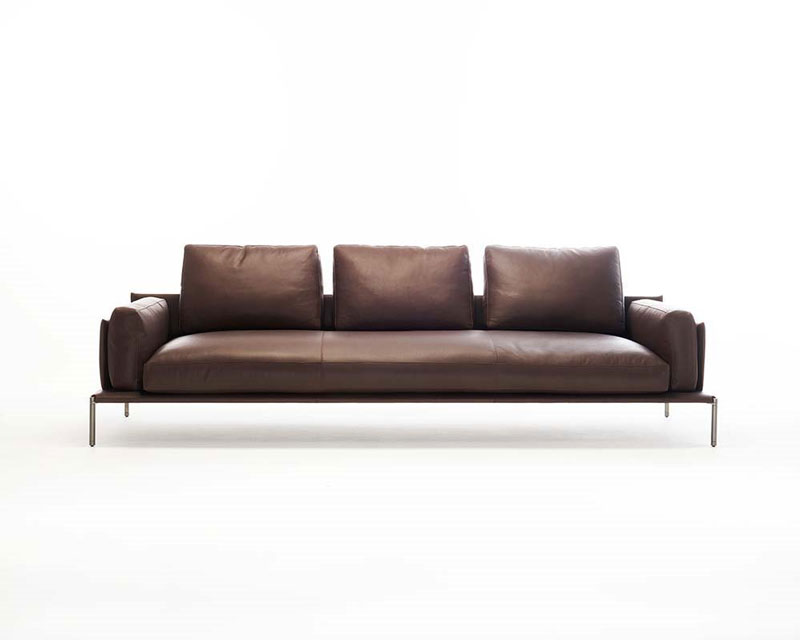
In contemporary interiors, neutral tones largely dominate. Beiges, warm greys, and natural shades allow for a soft, timeless integration that endures over time.
However, some projects deliberately opt for more assertive colours, where tone becomes a structuring element within the space. Deep or earthy hues can then transform the sofa into a true focal point of the living room.
The choice of colour therefore depends as much on the desired style as on the intention of integration or contrast within the space.
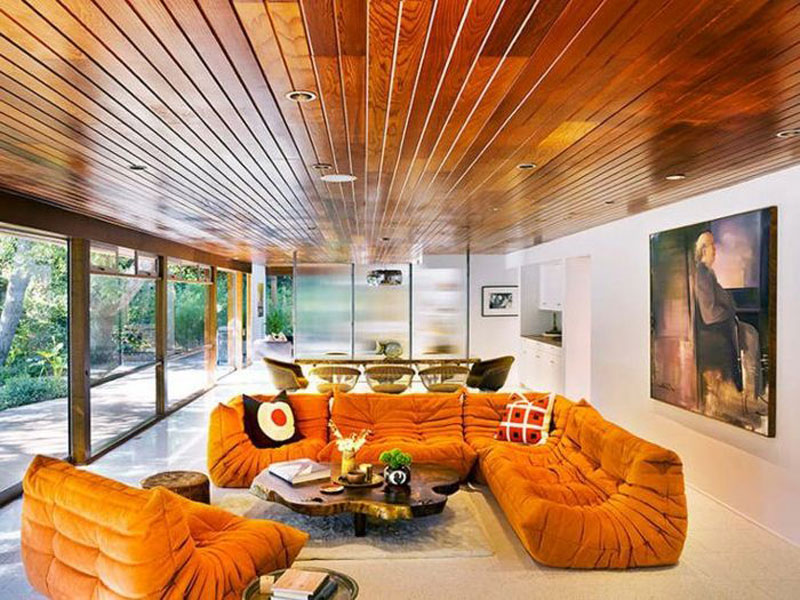
Togo – Ligne Roset. An iconic volume whose colour can either blend into the space or become a strong visual anchor.
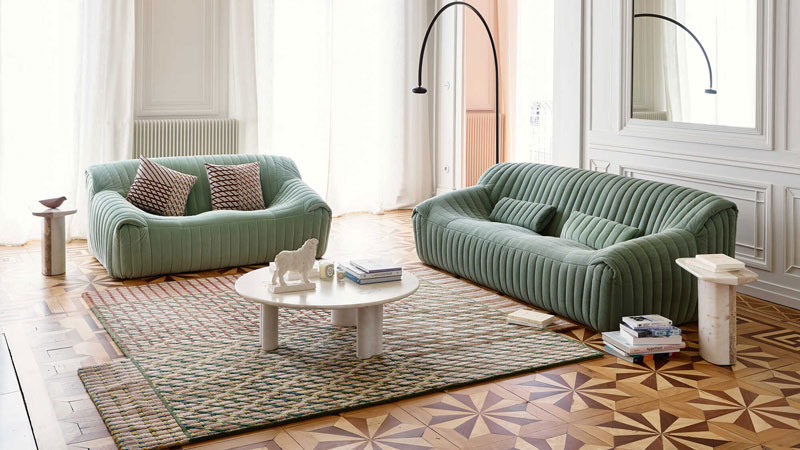
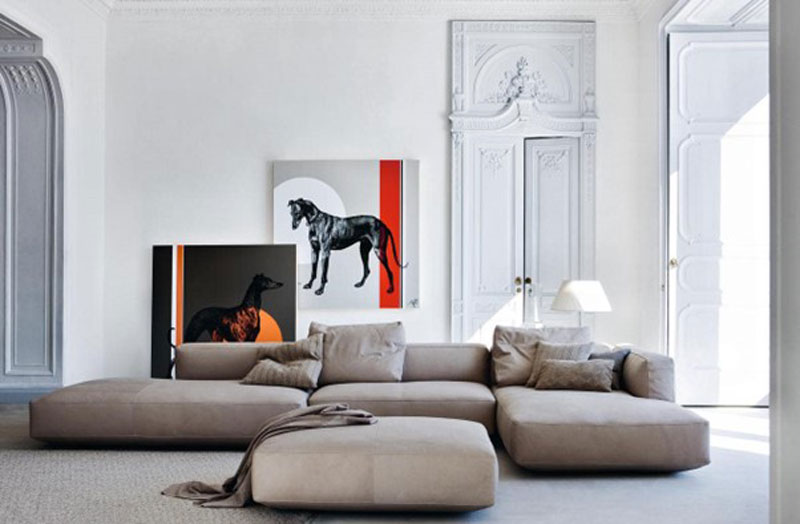
Sandra – Ligne Roset. A sofa placed directly on the floor, enhancing the sense of stability and enveloping comfort.
A sofa is never chosen in isolation. It belongs to a broader composition where each element influences the perception of the whole.
The rug defines the area, the coffee table organises interaction, and lighting reveals volumes. Well-designed lighting can completely transform how a sofa is perceived, either accentuating its lines or softening its forms.
Beyond technical and aesthetic considerations, choosing a sofa ultimately comes down to a simple question: how do you want to live in your space?
Some will prefer deep, enveloping seating, while others will favour more structured, architectural lines. Some will look for a discreet sofa, others for a strong statement piece capable of organising the entire living room.
There is no right or wrong choice—only coherence between lifestyle, space, and aesthetic sensitivity.
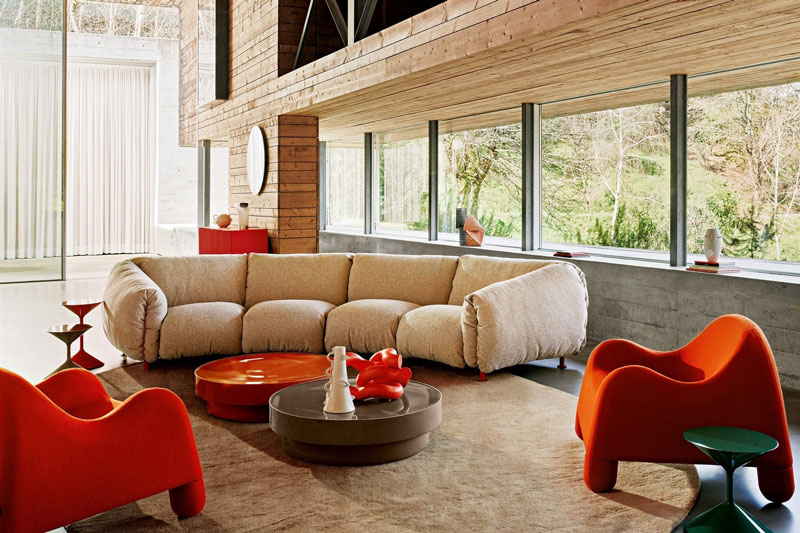
A selection of high-end designer sofas is available at Sisu, on Avenue Georges Henri in Brussels.
The showroom brings together pieces from some of the most renowned contemporary design houses, including Ligne Roset, Zanotta, MDF Italia, Saba Italia, and Atemporal.
Personalised advice is offered in the showroom to help guide each choice according to space, usage, and desired aesthetic. Free delivery is available.
Choosing a high-end designer sofa is not simply an aesthetic or functional decision. It is a deeper act of interior design that shapes the way a space is lived in on a daily basis.
The sofa becomes a point of balance: between comfort and structure, presence and lightness, intimate use and architectural reading of space. Depending on the brand, this idea takes very different forms—more sculptural, more modular, more enveloping, or more graphic—but it is always rooted in the same intention: to turn comfort into a lasting experience, designed to endure both time and use.
*Not valid in conjunction with any other ongoing promotions.